
Engineering and technology work is increasingly accomplished through teams. The challenge is that putting talented people together does not automatically create a high-performing team. Teams can have strong technical expertise and still struggle with trust, coordination, communication, decision-making, follow-through, or shared direction. Click the image on the left for a video overview of the course.
Leading High-Performing Engineering & Technology Teams is a graduate-level course designed to help students understand, diagnose, and improve how teams actually work. Rather than treating teamwork as a matter of personality, chemistry, or generic “soft skills,” the course examines team performance through three complementary lenses: team structure and design, psychological safety and climate, and the observable behavioral patterns that shape how people connect, coordinate, and align. The course syllabus is available at the link below:
Students learn how to recognize those patterns, determine which ones matter most, and design practical interventions that can improve team performance in engineering and technology settings. The course is designed primarily for students in Purdue’s Master of Engineering Management program and other professional graduate programs in engineering. When space is available, other graduate students may also enroll.
Teams Are Where Performance Happens
Science, engineering, and technology are increasingly team sports. Complex technical work requires people with different forms of expertise to combine knowledge, make decisions, solve problems, respond to uncertainty, and execute together. The quality of the individual contributors matters, but so does the quality of the interactions between them. This course begins with a deceptively simple question:
What do high-performing teams actually do differently?
Students examine foundational research on team effectiveness alongside contemporary work on psychological safety, team design, behavioral dynamics, coordination, resilience, and distributed work. A central premise of the course is that many of the conditions we associate with great teams are not mysterious. They emerge from patterns that can be observed, discussed, practiced, and improved.
The Team Biodynamics Framework
One of the primary frameworks used in the course is Team Biodynamics, which organizes team behavior around three channels:
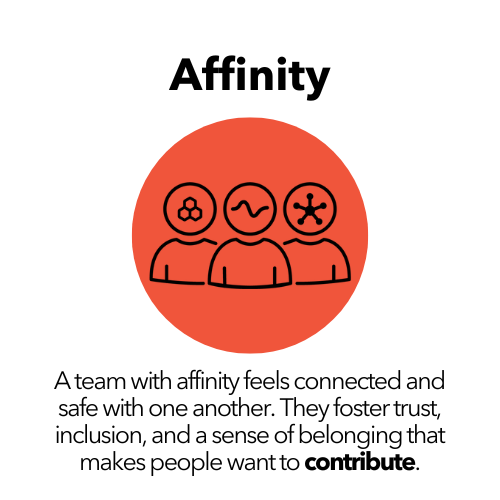
Affinity is the relational channel. It reflects the patterns that create trust, belonging, inclusion, mutual care, and the willingness to contribute.
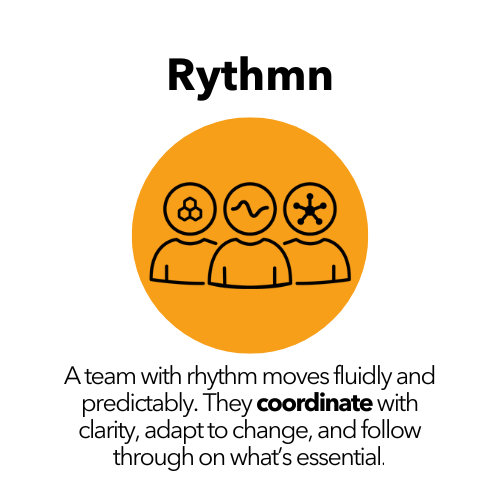
Rhythm is the functional channel. It reflects the patterns that enable coordination, information flow, reliable execution, adaptability, and follow-through.
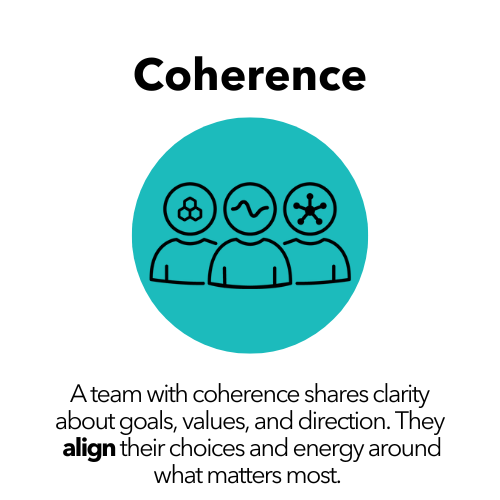
- Coherence is the directional channel. It reflects the patterns that keep a team aligned around goals, priorities, values, and shared purpose.
Each channel is expressed through six observable behavioral biomarkers, creating an 18-biomarker framework students can use to diagnose team performance. The point is not to assign teams a label or a personality type. The goal is to understand which behavioral signals are strong, weak, inconsistent, or distorted, and then determine what adjustments would improve performance.
Part One: Understanding Team Performance
The course begins by examining what a team actually is and why high performance is more complicated than simply assembling capable people. Students explore:
- how individual behavior becomes collective behavior;
- the evolutionary and biological foundations of teamwork;
- psychological safety and interpersonal risk;
- established models of team effectiveness;
- the difference between team structure, team climate, and team behavior;
- the Team Biodynamics framework of Affinity, Rhythm, and Coherence.
The goal is to give students multiple lenses for understanding why teams succeed, stall, or break down.
Part Two: Diagnosing Affinity, Rhythm, and Coherence
The middle portion of the course focuses on the three Team Biodynamics channels in greater depth. Students examine how teams build or erode trust and belonging, how coordination and execution develop over time, and how shared purpose influences decisions and performance. Topics include:
- psychological safety and voice;
- belonging, inclusion, and trust;
- information flow and handoffs;
- work cadence and follow-through;
- adaptability;
- shared goals and priorities;
- values and decision criteria;
- alignment and shared mental models;
- behavioral misfires, gaps, and distortions.
Students complete a series of individual diagnostic assignments that develop their ability to distinguish observable behavior from interpretation and to move beyond vague labels such as “poor communication” or “lack of trust.”
Part Three: Designing and Sustaining Team Performance
The final portion of the course moves from diagnosis to development. Students explore how to improve team performance through targeted changes in behavior, structure, routines, decision processes, and coordination mechanisms. The course also examines what happens when teams operate under pressure, experience conflict or disruption, cross organizational boundaries, work virtually, or collaborate with emerging technologies such as AI. Topics include:
- behavioral micro-habits;
- team coaching and tuning;
- resilience, rupture, and recovery;
- distributed and cross-functional teams;
- teams operating without clear authority;
- multi-team systems;
- AI-enabled and hybrid forms of teamwork;
- sustaining performance over time.
The emphasis is practical: once you understand what is happening in a team, what do you actually do about it?
Team Performance Design Project
The major integrative assignment is the Team Performance Design Group Project. Student groups partner with a real team and work with that team throughout the semester. The partner team might be a student project team, research lab, engineering design team, administrative team, student organization, committee, or another group engaged in genuinely interdependent work. Students gather evidence through a combination of interviews, observation, team artifacts, and an 18-biomarker Team Biodynamics diagnostic. They then move through a series of milestones:
- Milestone 1: Partner Team, Access, and Project Framing
Students identify the team, establish access, and define the initial performance question. - Milestone 2: Evidence and Team Performance Diagnosis
Students analyze Affinity, Rhythm, Coherence, and relevant structural and climate conditions to identify the dynamics that matter most. - Milestone 3: Team Performance Intervention Design
- Students design targeted interventions, implementation approaches, behavioral micro-habits, and measures of improvement.
The course concludes with a comprehensive final report and a professional presentation explaining what the team should do next. The project is designed to resemble real team-performance consulting: gather evidence, diagnose carefully, prioritize, design interventions, and communicate recommendations that people could actually use.
Textbooks and Learning Resources
The course draws from three complementary perspectives. Scott Hutcheson’s forthcoming Biohacking Teams: Leveraging the Biology of Behavior for Peak Performance provides the behavioral and biological lens, including the Team Biodynamics framework. Amy Edmondson’s The Fearless Organization provides a research-based examination of psychological safety, voice, learning, and interpersonal risk. Work on effective team design provides the structural lens: how team composition, roles, task design, decision rights, and organizational support influence performance. Students also engage with selected research articles, cases, and applied tools throughout the semester.
Who Should Take This Course?
This course is designed for graduate students and working professionals who expect to lead, participate in, or support teams in engineering, technology, research, product development, operations, innovation, or other complex environments. It is especially relevant for students who want to become better at:
- leading without relying only on formal authority;
- diagnosing why a technically capable team is underperforming;
- strengthening psychological safety without lowering standards;
- improving coordination and execution;
- working across functions and disciplines;
- helping teams perform under pressure;
- designing better team practices rather than relying on personality or chemistry.
You do not need to be a formal team leader to benefit from the course. Much of effective teaming happens peer-to-peer.
Course Designer & Instructor

This course was designed and is taught by Scott Hutcheson, PhD, faculty member in the Purdue College of Engineering. For more than 30 years, Dr. Hutcheson has worked at the intersection of universities, organizations, communities, and industry. His teaching and applied work focus on leadership, team performance, strategy, collaboration, and systems change. He is co-author of Strategic Doing: Ten Skills for Agile Leadership and author of Biohacking Leadership: Leveraging the Biology of Behavior to Maximize Your Impact. His forthcoming Biohacking Teams extends that work from the individual leader to the behavioral dynamics of teams.